
Solar
Smart Meters, Smart Homes: Making Your Energy Data Work for You
Your smart meter records your energy use every 30 minutes — but most households never look at it. Here is how to turn that data into real savings.
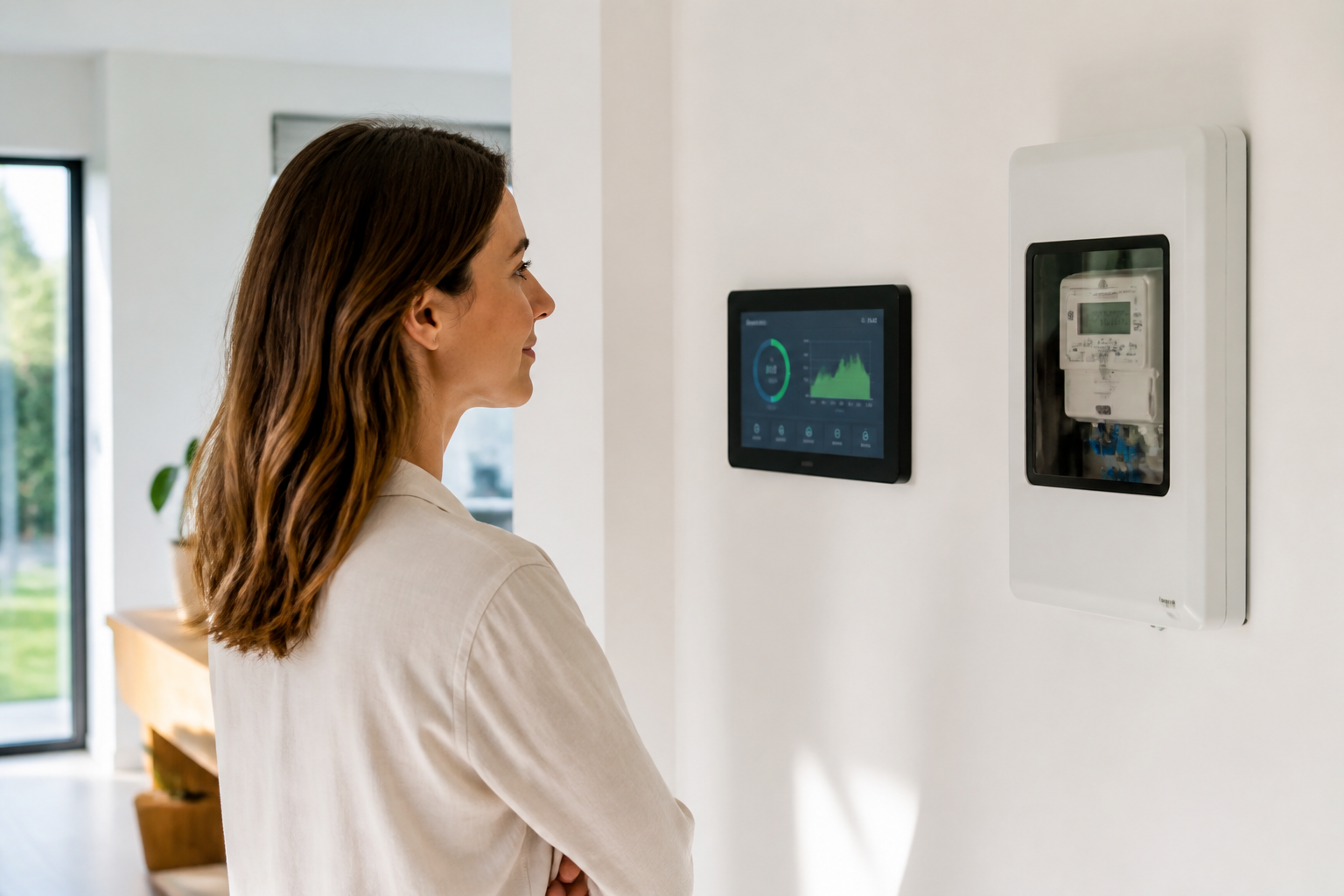
Almost every home in Victoria already has a smart meter on the wall, quietly recording electricity use in 30-minute blocks and sending it back to your distributor. Most households never look at that data. That is a shame, because it is the single most useful free tool you have for cutting your bill — and for deciding whether solar, a battery or a tariff change will actually pay off for you.
Getting your hands on the data
Every electricity retailer must give you access to your usage history, usually through their app or web portal. You can also request your full interval data as a CSV file from your distributor — in Victoria, portals like the distributor websites let you download a year or more of half-hourly readings. Once you can see your usage across a day, patterns jump out immediately: the morning kettle-and-heating spike, the flat daytime valley while everyone is out, and the big evening ramp when cooking, screens and hot water all collide.
What the shape of your day tells you
That daily shape is worth more than any online calculator. If your usage peaks between 5pm and 9pm, you are buying most of your power at the most expensive time of day, and a battery or a load shift will do more for you than extra panels. If someone is home through the middle of the day, your curve is flatter and solar self-consumption will be strong. A house with a tall overnight baseline often has a culprit worth chasing — an old fridge in the garage, a pool pump on the wrong timer, or an electric hot water unit heating at the wrong hours.
Smart plugs, timers and small wins
You do not need a whole-home automation system to act on the data. A handful of smart plugs with energy monitoring, a timer on the pool pump and a delay-start habit on the dishwasher can shift several kilowatt-hours a day into cheaper periods — or into your solar window if you have panels. Households that make these changes typically trim ten to fifteen per cent off their bill before touching any hardware on the roof.
Using data to size your next upgrade
When we design a solar or battery system at HiTech Energy, real interval data beats every rule of thumb. Twelve months of half-hourly readings tells us exactly how many kilowatt-hours you can self-consume, how big a battery you can genuinely cycle each evening, and whether a time-of-use tariff would suit you. That means a system sized to your life rather than a template — and a payback estimate you can actually trust.
The takeaway: before you spend a dollar on hardware, spend an evening with your own data. It costs nothing, and it makes every decision after it smarter.