
Solar
Solar for Small Business: What Commercial Rooftops Do Differently
Commercial solar is not just a bigger version of home solar. Daytime-heavy usage, flat roofs and different rebates change the whole equation — usually for the better.
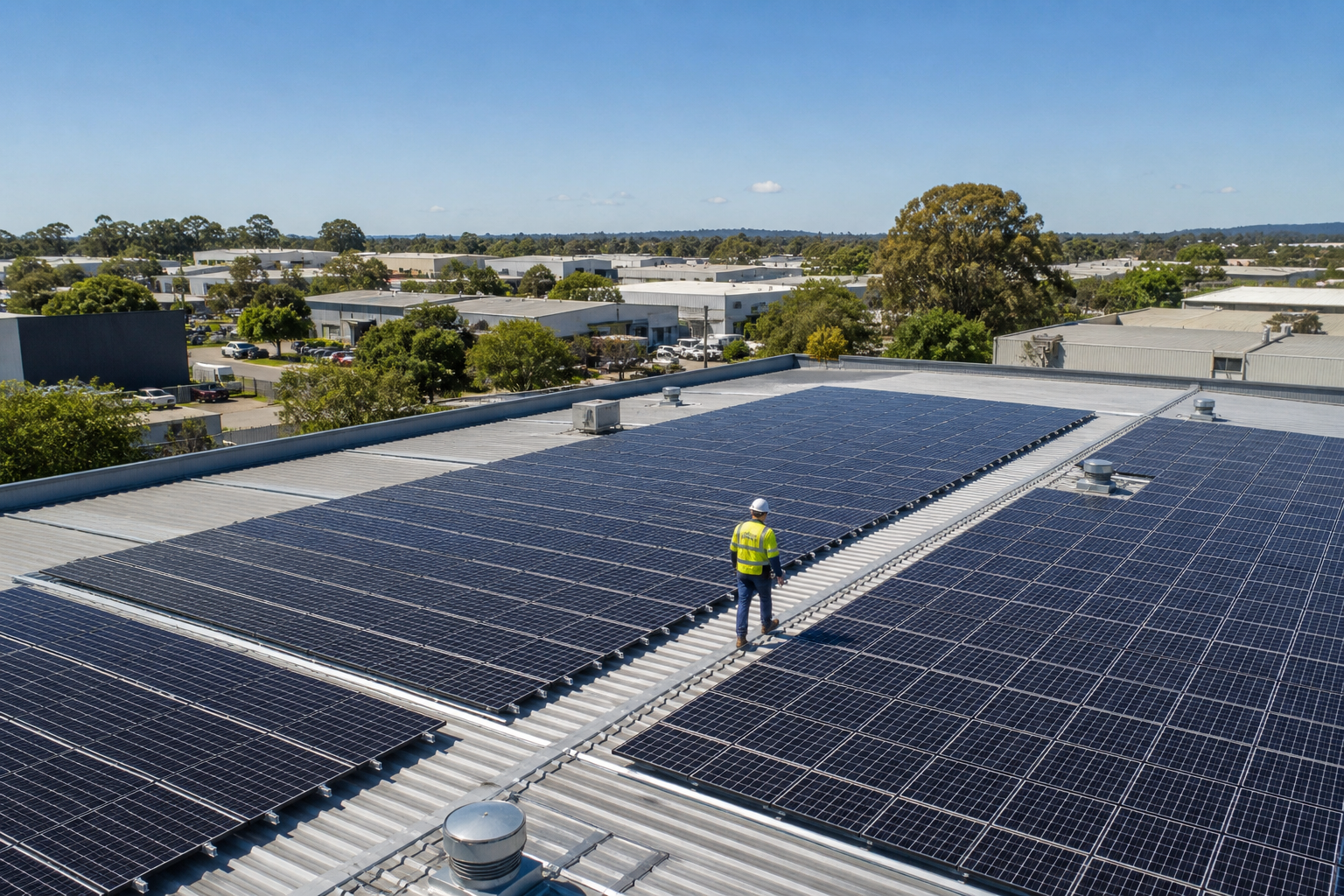
If you run a workshop, a clinic, a cafe or a small warehouse, the maths on solar is often better than it is for the house you go home to. The reason is simple: businesses use most of their electricity during daylight hours, which is exactly when panels produce. Where a household might self-consume a third of its solar, a weekday business can easily use eighty or ninety per cent of everything the roof generates.
Daytime load is the whole game
Every kilowatt-hour you consume straight from your own roof replaces grid power bought at commercial rates. Fridges, compressors, air conditioning, machinery and computers all hum along through the middle of the day, soaking up generation as it happens. That high self-consumption is why commercial paybacks of three to five years are common, where residential systems often sit closer to four to seven.
Flat roofs change the engineering
Most commercial buildings have flat or low-pitch metal roofs, which sounds like a limitation but is actually an opportunity. Tilt frames let us orient panels for the best yield regardless of which way the building faces, and ballasted mounting systems can avoid roof penetrations entirely on some structures. The trade-offs are wind loading calculations and row spacing to prevent panels shading each other — details a residential-only installer may never have dealt with.
Bigger systems, different approvals
Once a system passes 30 kilowatts, it moves into a different approval category with your network distributor, and export limits become a genuine design consideration. Three-phase supply, which most commercial premises already have, makes larger inverters straightforward. Metering also matters: many businesses are on demand tariffs, where solar can shave the peaks that set your network charges — a saving that never shows up in a simple kilowatt-hour comparison.
Incentives worth knowing about
Small-scale technology certificates still apply to commercial systems up to 100 kilowatts and knock a meaningful slice off the upfront cost. Beyond that, the instant asset write-off provisions have allowed many small businesses to depreciate a solar system quickly, improving the after-tax picture — your accountant can confirm what applies in the current financial year. Some states also run dedicated small business energy programs that stack on top.
Where to start
Start with twelve months of interval data from your meter, a photo of your switchboard and a rough idea of your daytime operating hours. From that, a good designer can model generation against your real load profile and give you a payback figure grounded in evidence rather than brochure optimism. HiTech Energy designs commercial systems this way as standard — because a business case should be built on your numbers, not somebody else's averages.